Marakkar: An Epic Cinematic Disaster
MUHAMMED NOUSHAD sees Marakkar: Lion of the Arabian Sea as an irresponsible and insipid spectacle rather than a work of art on history.
Marakkar: Arabikkadalinte Simham (Marakkar: Lion of the Arabian Sea) opens with a disclaimer stating that the film is not a work of pure history, but rather one inspired by certain historical events. Whenever the historical record is contradictory or incomplete, the filmmakers claim to have exercised creative freedom. Fine. We understand historical cinema often requires imagination. But the next line of the disclaimer, however, is more intriguing. It states that the language and costumes used in the film are not necessarily representative of the period or the people portrayed. Reading this, I could not help but laugh. What do they mean? Does this disclaimer also apply to the grand palatial sets and lavish art direction? If everything – from language to costume to visual design – is detached from historical reality, one wonders what truth the film is ultimately attempting to convey, even artistically. In a moment of sarcasm, I felt the disclaimer could have added another line: “Please consider this a reflection of our arrogance and ignorance; for us, history is merely a vehicle for spectacle and profit.”
Despite its enormous budget, impressive production values, a constellation of superstars from across South Indian cinema, and even a full-length appearance by Suniel Shetty, Marakkar ends up being an epic disappointment—an epic failure inflicted upon an epic historical figure.
The nearly three-hour-long period drama, directed by veteran filmmaker Priyadarshan, descends repeatedly into melodrama. Not even the sincere performances of Mohanlal and his son Pranav Mohanlal can rescue the film from its exhausting predictability and narrative inertia. The visual effects team deserves credit, particularly for the naval battle sequences, which are mounted with considerable technical competence. Who doesn’t know that impressive visuals alone cannot make a compelling film?
What Marakkar desperately lacks is a strong and engaging script. Everything else is in place: a massive production apparatus, some of South India’s finest actors, extensive hype, and a legendary hero who occupies a cherished place in Kerala’s collective memory. What is missing is good storytelling.
The film seems particularly invested in rescuing the Zamorin from the uncomfortable historical accusation of having betrayed his own naval commander, Kunjali, to the Portuguese. To achieve this, the narrative twists and tweaks itself in increasingly implausible ways. One can sense the screenplay struggling to reconcile popular sentiment with inconvenient history.
To be fair, the film is not without moments of beauty. There are a handful of moving conversations and visually arresting scenes that briefly hint at the film it might have been. But these moments remain isolated islands in a sea of overblown performances, ponderous dialogue, and a pathetically distorted rendering of Muslim dialect and culture.
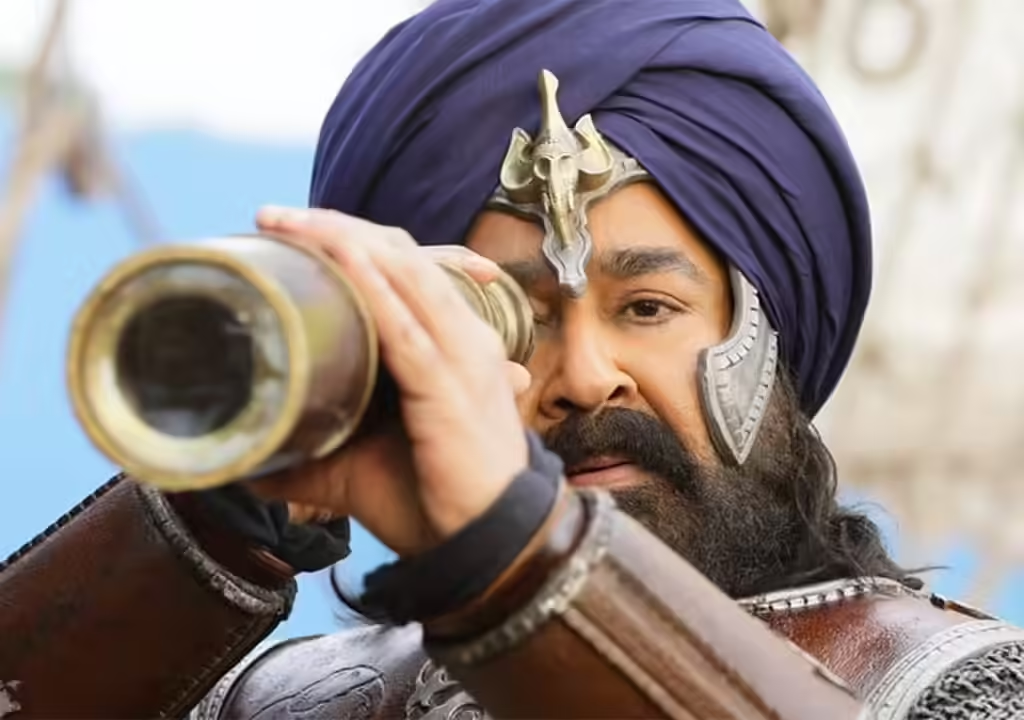
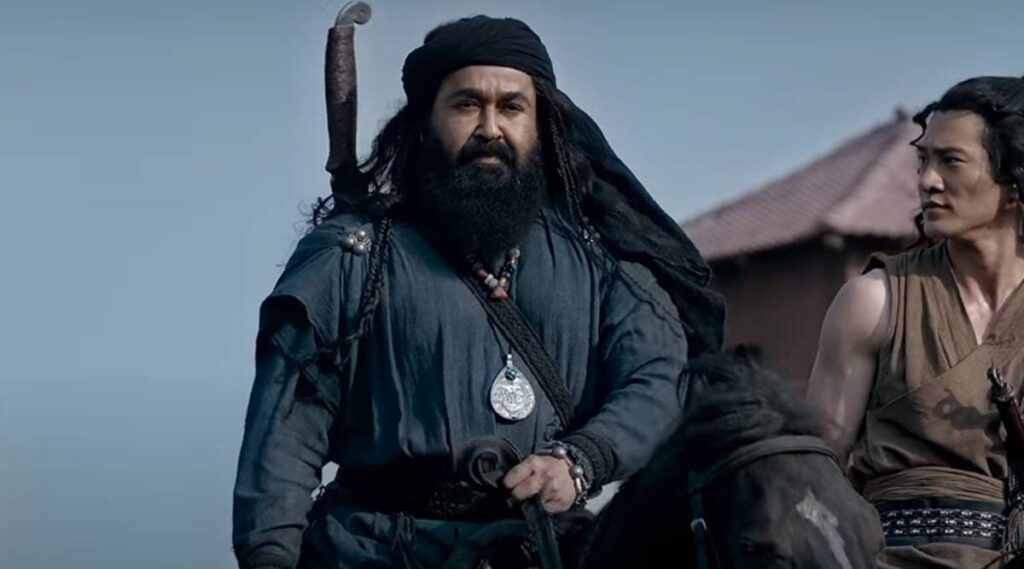
The political inclinations of the filmmakers are hardly a secret, and many critics have already pointed out the subtle ways in which the film attempts to detach Kunjali Marakkar from his Muslim identity. This tendency is visible even in the costume design, which bears little resemblance to sixteenth-century Malabar. At times, the stylization becomes almost absurd – most notably in the climactic naval battle, where Marakkar appears in an ornate face armour resembling a Ganapati icon upon a trishula, more than anything rooted in the historical world the film claims to depict. The opening disclaimer seems less an artistic clarification than an anticipatory legal shield against the controversy that was already brewing around the film when it was released in 2021. Marakkar’s descendants had publicly objected to what they saw as a distortion of the legacy of their family’s most revered leader and were reportedly considering legal action.
Kunjali Marakkar deserved a film worthy of his legacy. What he received instead was a spectacle more concerned with hyped grandeur than historical truth.


