‘Nuremberg’: A Reminder That the Nazis Are Not Gone
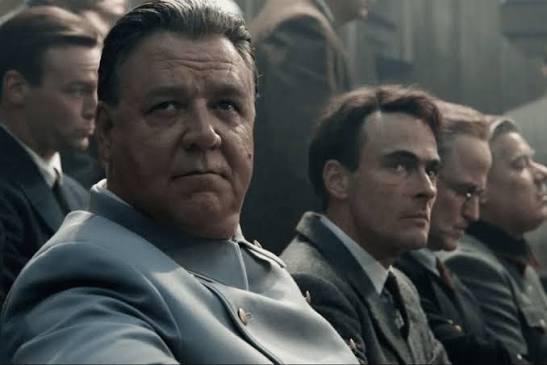
MUHAMMED NOUSHAD watches Nuremberg and takes it as a warning that what happened in Nazi Germany can be repeated anywhere else.
Were the German Nazis unique in their cruel disposition and capacity for genocidal evil? None of those who studied them, especially during the famous Nuremberg Trials, believed so. This was particularly true of Dr. Douglas Kelley, the chief psychiatrist who worked closely with high-ranking Nazi leaders, including Hitler’s second-in-command Hermann Goring and the Reich’s deputy Rudolf Hess, in preparation for and during the trials.
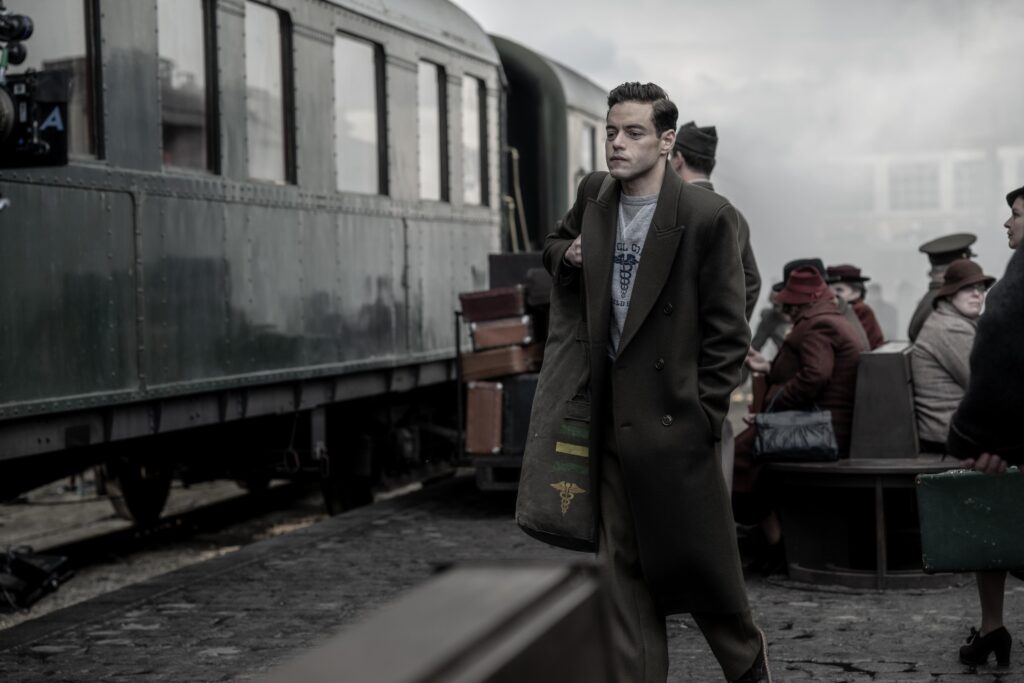
In one of the closing scenes of the 2025 historical drama ‘Nuremberg‘, the protagonist Douglas Kelley (portrayed by Rami Malek) sharply warns that America, too, has politicians capable of repeating what Hitler did in Germany: “There are people in America who would willingly climb over the corpses of half the American public if they knew they could gain control of the other half. They stoke hatred. That’s what Hitler and Goring did, and it is textbook. And if you think the next time it happens, we are going to recognise it because they are wearing scary uniforms, then you are out of your damn mind.” Dr. Kelley, who served in the U.S. Army during the Nuremberg Trials and was tasked with assessing the psychological condition of the top Nazi leaders, did not believe that the Nazis were unique in their aspirational violence or genocidal ambitions. Nor did his famous contemporary, Hannah Arendt, whose controversial studies explored the psychology of evil and its apparent banality in philosophical ways.
Kelley believed that people anywhere in the world, armed with an ideology rooted in hatred, could behave like the Nazis and repeat what they did. He even documented it in his book. That is where Nuremberg becomes an important political statement, serving as a reminder and a warning that we are not safe as long as xenophobic hatred remains a part of politics anywhere in the world. Unfortunately, such hatred is pervasive and alarming. Wars are waged, both internally and externally, around it.
One cannot miss the fact that politicians with the potential of Hitler still exist, in minor or major forms, subtly or loudly proclaiming almost similar supremacist tirades to divide people, sow hatred against one another, reap profit and power out of it, and eventually aim at exterminating entire races and nations in favour of one race, or one nation, or one ideology. In disgusting paranoia of narcissistic outbursts, we see this even today: some corrupt authoritarian rulers – despite the democracies that brought them into power – shamelessly threatening with all sorts of war crimes, out in the public, often with a striking sense of impunity.
The film reminds us, in a conversation, that Hitler, too, rose to power through democratic processes. The Nazi Party became the largest party in the German parliament through elections, and Hitler was subsequently appointed Chancellor. Later, the Nazi Party brutally crushed the whole opposition and dissolved all other political parties, making the Nazi Party the only legal party in Germany. Democracy can be dismantled from within. History is a lesson. The film concludes with a quote, originally by English philosopher and historian R.G Collingwood: “the only clue to what man can do is what man has done.”
In the movie, the German-born Jewish soldier serving in the US Army as an occasional translator, Sergeant Howie Triest tells the psychiatrist, “you want to know why it happened here? Because people let it happen, because they didn’t stand up until it was too late.” The fact that he had lost his parents in the Holocaust adds emotional weight to his commitment to the cause.
During the trial sequences, Nuremberg uses extensive real footage from the Holocaust. The images are inexplicably inhuman and disturbingly violent. Hermann Goring watches them, yet he never expresses remorse, at least not on record, for what he did. He tells the doctor that the only reason he is in prison is that Germany lost the war, not because the Americans are morally superior.
In a worldview where war is the norm and peace an aberration, such a perspective is not surprising. War is about killing, massacring, destroying and winning. “What else do you think of war?” he mockingly asks the doctor. He also challenges the moral legitimacy of Americans to conduct the trials when they have dropped atomic bombs on Hiroshima and Nagasaki. Are they not war crimes is a legitimate question. “You think American bullets and bombs don’t kill people? You vaporise 150,000 Japanese at the touch of a button and you presume to stand in judgement on me for war crimes?”
Another area the movie’s moral compass spans is the Catholic Church’s stance on politically volatile topics. In one scene, Associate Justice Richard approaches Pope Pius XII for the support of the Vatican in the trials, but the Pope refuses. Then Richard reminds him of the concordat he himself signed with Hitler, which the Nazi regime used to gain legitimacy. Although the agreement was originally meant to protect the interests of the German Catholic community, it was widely abused by the Nazis. “The Catholic Church was the first world power to acknowledge the Führer State. You gave the Nazis credibility,” Richard tells the Pope.
Beyond its political themes, Nuremberg is also commendable storytelling. Written and directed by James Vanderbilt and based on Jack El-Hai’s 2013 book The Nazi and the Psychiatrist, the film humanises Hermann Göring (performed by Russell Crowe) while also hinting at the personal tragedies and inner struggles of Dr Kelley.
[This was originally published in Counter Currents. https://countercurrents.org/2026/06/nuremberg-a-reminder-that-the-nazis-are-not-gone ]


