‘Commitment Hasan’: A Visual Ode to the Soul of Pilgrimage
Set in the context of preparing for the Hajj, Semih Kaplanoğlu’s Commitment Hasan is a reminder of moral commitments that one shouldn’t compromise. A review by MUHAMMED NOUSHAD.
What lies at the core of morality, or the idea of being thoroughly good, is a hard question. Religion and spirituality strive to help humans attain that destination through rituals, practices, and profound values. In the Muslim faith, Hajj is commonly understood as a believer’s most important rite through which his/her soul is purified, if God accepts it. And the acceptance requires seeking forgiveness from those wronged: family, friends, neighbours, business clients or whoever. In other words, one cannot enter the sacred state of being a pilgrim while carrying the bitterness or grudges of others. But what happens if forgiving is withheld? What if the person you seek forgiveness from is no longer alive, or has gone beyond memory? Turkish master filmmaker Semih Kaplanoğlu brings this tension deep in his movie Commitment Hasan (2021), adding philosophical and spiritual layers to it; reminding us that forgiveness lies within human will, while forgetting belongs to the divine. And, the pilgrimage is not a ritual, but a lifelong moral commitment.

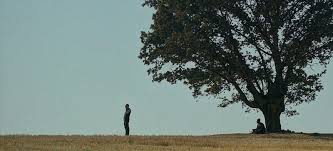
Like his earlier films, Commitment Hasan also explores the profound soul-searching that is essential to human existence —a journey that sails through comfort, remorse, moral ambiguity, and potential redemption. A powerful story of a farmer named Hasan, who prepares for the Hajj pilgrimage while grappling with the deceptions of his past. The wind, present throughout the film, serves as a striking metaphor – both omnipresent and threatening, embodying the unseen weight pressing on Hasan’s conscience. The cinematography, as in all of Kaplanoğlu’s works, is stunning, evoking comparisons with great masters like Tarkovsky and contemporary legends like Terrence Malick. Just as Malick infuses Catholic imagery into his cinema, Kaplanoğlu draws deeply from Islamic motifs, crafting a conversation between faith and film.
What is more striking is that the director brings a context to the moral corruption of the protagonist. The encroachment of huge electric posts and lines across his land, Hasan’s consistent effort to get it shifted to the nearby land, the bureaucratic entanglements, his greedy and dishonest race to acquire more wealth – all this has a price to pay: his conscience. Here, besides the human fragility of being selfish and greedy, the system by default is also complicit, even though it doesn’t particularly look cruel or unkind.
Hasan envies his own workers, unjustly brands a colleague a thief, and poisons his land with pesticides, harming birds and cats. His marriage reveals mutual regrets: “if I had listened to my mother and married the daughter of Muhtisin, half of the town would have been mine by now,” sounds highly insensitive. But his wife Emine begins the blame game: “my sister advised me to complete school before I elope with you. I should have listened to her. I might have learned a trade and made money on my own.” Noticeably, Emine is also shown with shades of moral ambiguity; she bargains unfairly with a poor seamstress while also showing generosity towards another person. Perhaps, to show us that goodness and frailty can often coexist.
Although the movie never takes us to Mecca, this is one of the most philosophical explorations of the idea of Hajj. Kaplanoglu brings a miniature Kaaba to this Turkish village and poses profound questions about moral commitments, which need to be a lifelong effort rather than something you may ritualistically fix before a literal pilgrimage. The true pilgrimage is inward, like the Sufis say, the real Hajj is the return to God, and every earthly journey is a rehearsal for that final homecoming. Significantly, the movie, especially its closure, doesn’t state if the couple eventually made it to the Kaaba. What matters is not their physical arrival, but the spiritual reckoning, the pure preparedness. Commitment Hasan challenges the common belief that redemption can be won at the last moment through ritual or apology. Instead, it reminds us that moral commitment is a lifelong discipline, and that’s the true spirit of Hajj.
In the official training session, pilgrims are told that the ritual circling (ṭawāf) mirrors the cosmic motion of all creation revolving around its center. This idea encapsulates the film’s heartbeat: that our lives, our moral struggles, and even our failures are part of a greater orbit, and the question is not only where we travel but how we prepare ourselves for the journey.
[Originally published in Madhyamam English: https://madhyamamonline.com/entertainment/movie-review/commitment-hasan-a-visual-ode-to-the-soul-of-pilgrimage-1445071 ]


